How to Get Oil Stains Out of Clothes: A Comprehensive Guide

Oil stains can be some of the most frustrating types of stains to deal with when it comes to laundry. Whether they come from cooking oil, motor oil, or even salad dressings, oil stains are notorious for being difficult to remove. However, with the right techniques and materials, you can effectively treat and eliminate these pesky stains. This article provides a detailed guide on how to get oil stains out of clothes, covering various methods, tips for prevention, and advice for dealing with stubborn stains.
Table of Contents
ToggleUnderstanding Oil Stains
Before diving into the removal methods, it’s important to understand what oil stains are and why they can be so difficult to remove. Oil stains occur when oil or grease penetrates the fabric fibers. The molecular structure of oil allows it to bind tightly to fabric, making it resistant to water-based cleaning solutions. This is why using soap and water alone often doesn’t work.
Types of Oil Stains
- Cooking Oil: Common in kitchen settings, these stains usually come from frying or food preparation.
- Motor Oil: These stains can come from working on vehicles or machinery and are typically darker and more stubborn.
- Makeup: Many cosmetics, such as foundations or lipsticks, contain oils that can stain clothing.
- Salad Dressings: Dressings often contain oil and can leave stains, especially if they splatter.
Step-by-Step Guide to Remove Oil Stains
1. Act Quickly
The sooner you treat an oil stain, the better your chances of completely removing it. Once the oil has time to set, it becomes more challenging to eliminate. If you notice an oil stain, take immediate action.
2. Blot the Stain
Use a clean, dry cloth or paper towel to blot the stain gently. Do not rub the stain, as this can spread the oil further into the fabric. Blotting will help absorb some of the oil.
3. Apply a Stain Remover
Several effective methods can be employed to treat oil stains, including the following:
a. Dish Soap
Materials Needed:
- Liquid dish soap (preferably a grease-fighting formula)
- Warm water
- Soft-bristle brush or cloth
Instructions:
- Apply a small amount of dish soap directly to the oil stain.
- Gently work the soap into the stain using your fingers or a soft-bristle brush.
- Let it sit for 5-10 minutes.
- Rinse the fabric under warm water to remove the soap and oil.
- Check if the stain is gone; if not, repeat the process.
b. Baking Soda
Materials Needed:
- Baking soda
- Water
- Soft cloth or sponge
Instructions:
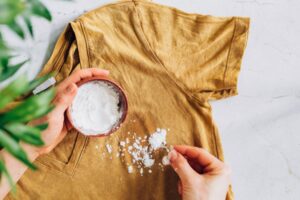
- Sprinkle a generous amount of baking soda directly onto the oil stain.
- Let it sit for about 30 minutes to absorb the oil.
- Gently brush off the baking soda.
- Rinse the fabric with warm water.
- Repeat as necessary.
c. Cornstarch or Talcum Powder
Materials Needed:
- Cornstarch or talcum powder
- Soft brush or cloth
Instructions:
- Cover the oil stain with cornstarch or talcum powder.
- Let it sit for 15-30 minutes.
- Brush off the powder gently.
- If the stain persists, repeat the process or use a different method.
d. Commercial Stain Removers
If home remedies do not work, consider using a commercial stain remover designed for grease and oil stains. Always follow the manufacturer’s instructions, and test the product on a small, inconspicuous area of the fabric first.
4. Wash the Clothing
Once you’ve treated the stain, wash the clothing according to the care label instructions. Use the hottest water temperature safe for the fabric, as hot water helps to break down any remaining oils. Avoid using fabric softeners, as they can trap oils in the fabric.
5. Check Before Drying
Before placing the clothing in the dryer, check to ensure the stain is completely gone. Heat from the dryer can set the stain permanently. If any trace of the oil stain remains, repeat the treatment process and wash again.
Dealing with Stubborn Oil Stains
Some oil stains can be particularly stubborn and may require multiple treatments. Here are some additional strategies to consider:
1. Vinegar and Dish Soap Solution
Materials Needed:
- White vinegar
- Liquid dish soap
- Warm water
Instructions:
- Mix one part vinegar with one part dish soap and two parts warm water.
- Soak a cloth in the solution and apply it to the stain.
- Let it sit for 30 minutes before rinsing with warm water.
- Wash the clothing as usual.
2. Rubbing Alcohol
Materials Needed:
- Rubbing alcohol
- Clean cloth or sponge
Instructions:
- Dampen a clean cloth with rubbing alcohol.
- Blot the oil stain with the cloth, allowing the alcohol to penetrate the fabric.
- Rinse with warm water and wash as usual.
3. WD-40
Materials Needed:
- WD-40
- Dish soap
- Soft cloth
Instructions:
- Spray a small amount of WD-40 onto the oil stain and let it sit for 10-15 minutes.
- Blot the stain with a clean cloth to absorb the oil.
- Apply dish soap directly to the stain and work it in.
- Rinse and wash as usual.
Prevention Tips
While knowing how to treat oil stains is important, prevention can save you time and effort. Here are some tips to minimize the risk of oil stains:
- Wear Aprons: When cooking, use an apron to protect your clothing from splatters and spills.
- Be Mindful of Products: Be cautious when applying oil-based products, such as lotions or makeup, and allow them to dry before getting dressed.
- Store Oils Safely: Keep cooking oils in secure containers to prevent spills.
Conclusion
Oil stains can be frustrating, but with the right techniques and tools, you can effectively remove them from your clothes. By acting quickly, using the appropriate cleaning agents, and following a systematic approach, you can restore your garments to their original condition. Remember to always check for any remaining stains before drying your clothes, as heat can set stains permanently. With these tips in mind, you’ll be better equipped to handle any oil stains that come your way, keeping your wardrobe looking fresh and clean.
Oil stains can be some of the most frustrating types of stains to deal with when it comes to laundry. Whether they come from cooking oil, motor oil, or even salad dressings, oil stains are notorious for being difficult to remove. However, with the right techniques and materials, you can effectively treat and eliminate these pesky stains. This article provides a detailed guide on how to get oil stains out of clothes, covering various methods, tips for prevention, and advice for dealing with stubborn stains.
Understanding Oil Stains
Before diving into the removal methods, it’s important to understand what oil stains are and why they can be so difficult to remove. Oil stains occur when oil or grease penetrates the fabric fibers. The molecular structure of oil allows it to bind tightly to fabric, making it resistant to water-based cleaning solutions. This is why using soap and water alone often doesn’t work.
Types of Oil Stains
- Cooking Oil: Common in kitchen settings, these stains usually come from frying or food preparation.
- Motor Oil: These stains can come from working on vehicles or machinery and are typically darker and more stubborn.
- Makeup: Many cosmetics, such as foundations or lipsticks, contain oils that can stain clothing.
- Salad Dressings: Dressings often contain oil and can leave stains, especially if they splatter.
Step-by-Step Guide to Remove Oil Stains
1. Act Quickly
The sooner you treat an oil stain, the better your chances of completely removing it. Once the oil has time to set, it becomes more challenging to eliminate. If you notice an oil stain, take immediate action.
2. Blot the Stain
Use a clean, dry cloth or paper towel to blot the stain gently. Do not rub the stain, as this can spread the oil further into the fabric. Blotting will help absorb some of the oil.
3. Apply a Stain Remover
Several effective methods can be employed to treat oil stains, including the following:
a. Dish Soap
Materials Needed:
- Liquid dish soap (preferably a grease-fighting formula)
- Warm water
- Soft-bristle brush or cloth
Instructions:
- Apply a small amount of dish soap directly to the oil stain.
- Gently work the soap into the stain using your fingers or a soft-bristle brush.
- Let it sit for 5-10 minutes.
- Rinse the fabric under warm water to remove the soap and oil.
- Check if the stain is gone; if not, repeat the process.
b. Baking Soda
Materials Needed:
- Baking soda
- Water
- Soft cloth or sponge
Instructions:
- Sprinkle a generous amount of baking soda directly onto the oil stain.
- Let it sit for about 30 minutes to absorb the oil.
- Gently brush off the baking soda.
- Rinse the fabric with warm water.
- Repeat as necessary.
c. Cornstarch or Talcum Powder
Materials Needed:
- Cornstarch or talcum powder
- Soft brush or cloth
Instructions:
- Cover the oil stain with cornstarch or talcum powder.
- Let it sit for 15-30 minutes.
- Brush off the powder gently.
- If the stain persists, repeat the process or use a different method.
d. Commercial Stain Removers
If home remedies do not work, consider using a commercial stain remover designed for grease and oil stains. Always follow the manufacturer’s instructions, and test the product on a small, inconspicuous area of the fabric first.
4. Wash the Clothing
Once you’ve treated the stain, wash the clothing according to the care label instructions. Use the hottest water temperature safe for the fabric, as hot water helps to break down any remaining oils. Avoid using fabric softeners, as they can trap oils in the fabric.
5. Check Before Drying
Before placing the clothing in the dryer, check to ensure the stain is completely gone. Heat from the dryer can set the stain permanently. If any trace of the oil stain remains, repeat the treatment process and wash again.
Dealing with Stubborn Oil Stains
Some oil stains can be particularly stubborn and may require multiple treatments. Here are some additional strategies to consider:
1. Vinegar and Dish Soap Solution
Materials Needed:
- White vinegar
- Liquid dish soap
- Warm water
Instructions:
- Mix one part vinegar with one part dish soap and two parts warm water.
- Soak a cloth in the solution and apply it to the stain.
- Let it sit for 30 minutes before rinsing with warm water.
- Wash the clothing as usual.
2. Rubbing Alcohol
Materials Needed:
- Rubbing alcohol
- Clean cloth or sponge
Instructions:
- Dampen a clean cloth with rubbing alcohol.
- Blot the oil stain with the cloth, allowing the alcohol to penetrate the fabric.
- Rinse with warm water and wash as usual.
3. WD-40
Materials Needed:
- WD-40
- Dish soap
- Soft cloth
Instructions:
- Spray a small amount of WD-40 onto the oil stain and let it sit for 10-15 minutes.
- Blot the stain with a clean cloth to absorb the oil.
- Apply dish soap directly to the stain and work it in.
- Rinse and wash as usual.
Prevention Tips
While knowing how to treat oil stains is important, prevention can save you time and effort. Here are some tips to minimize the risk of oil stains:
- Wear Aprons: When cooking, use an apron to protect your clothing from splatters and spills.
- Be Mindful of Products: Be cautious when applying oil-based products, such as lotions or makeup, and allow them to dry before getting dressed.
- Store Oils Safely: Keep cooking oils in secure containers to prevent spills.
Conclusion
Oil stains can be frustrating, but with the right techniques and tools, you can effectively remove them from your clothes. By acting quickly, using the appropriate cleaning agents, and following a systematic approach, you can restore your garments to their original condition. Remember to always check for any remaining stains before drying your clothes, as heat can set stains permanently. With these tips in mind, you’ll be better equipped to handle any oil stains that come your way, keeping your wardrobe looking fresh and clean.